
Fabric owners visiting galeriasvalleoriente.com often seek practical guidance on preventing ultraviolet light damage to interior design materials and furniture upholstery. Selecting high-quality textiles requires understanding how specific dye structures react to direct sunlight passing through residential glass. For example, Sarelli Textiles specializes in luxury italian fabrics that feature specific fiber compositions designed for interior applications. Understanding the relationship between material specifications, dye chemistry, and window exposure helps fabric owners protect valuable interior investments from premature degradation.
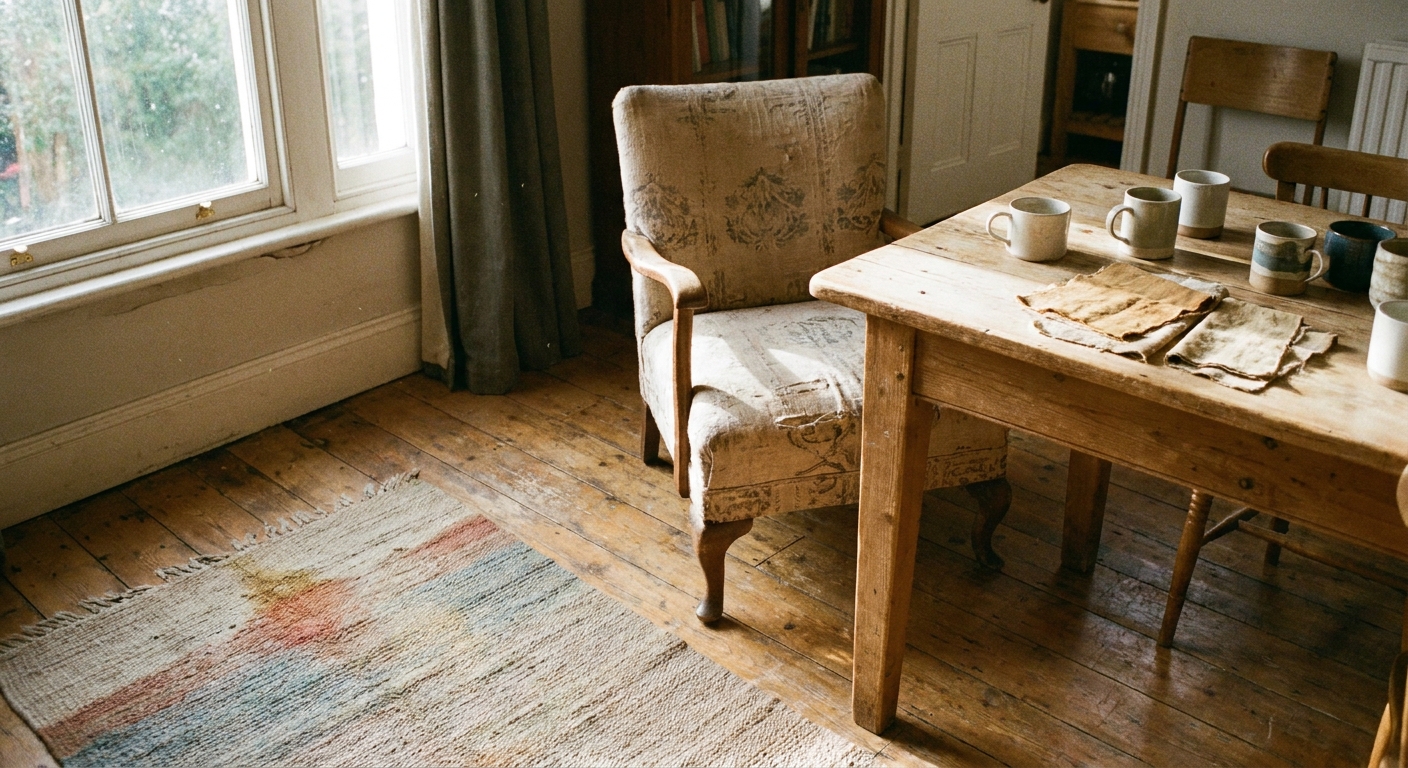
How do fiber dye structures react to ultraviolet window exposure?
Ultraviolet radiation passing through standard residential window glass breaks down the chemical bonds within synthetic and natural fiber dyes, causing visible color degradation on furniture upholstery and interior design materials over periods of 6 to 12 months depending on the specific dye composition and daily sunlight duration.
Natural fibers such as silk and cotton absorb ultraviolet light at higher rates than synthetic materials like polyester or acrylic when exposed to direct sunlight. The fading process accelerates when interior textiles lack protective window films or ultraviolet-blocking glass treatments. Fabric owners must evaluate material specifications before placing dyed textiles near south-facing windows.
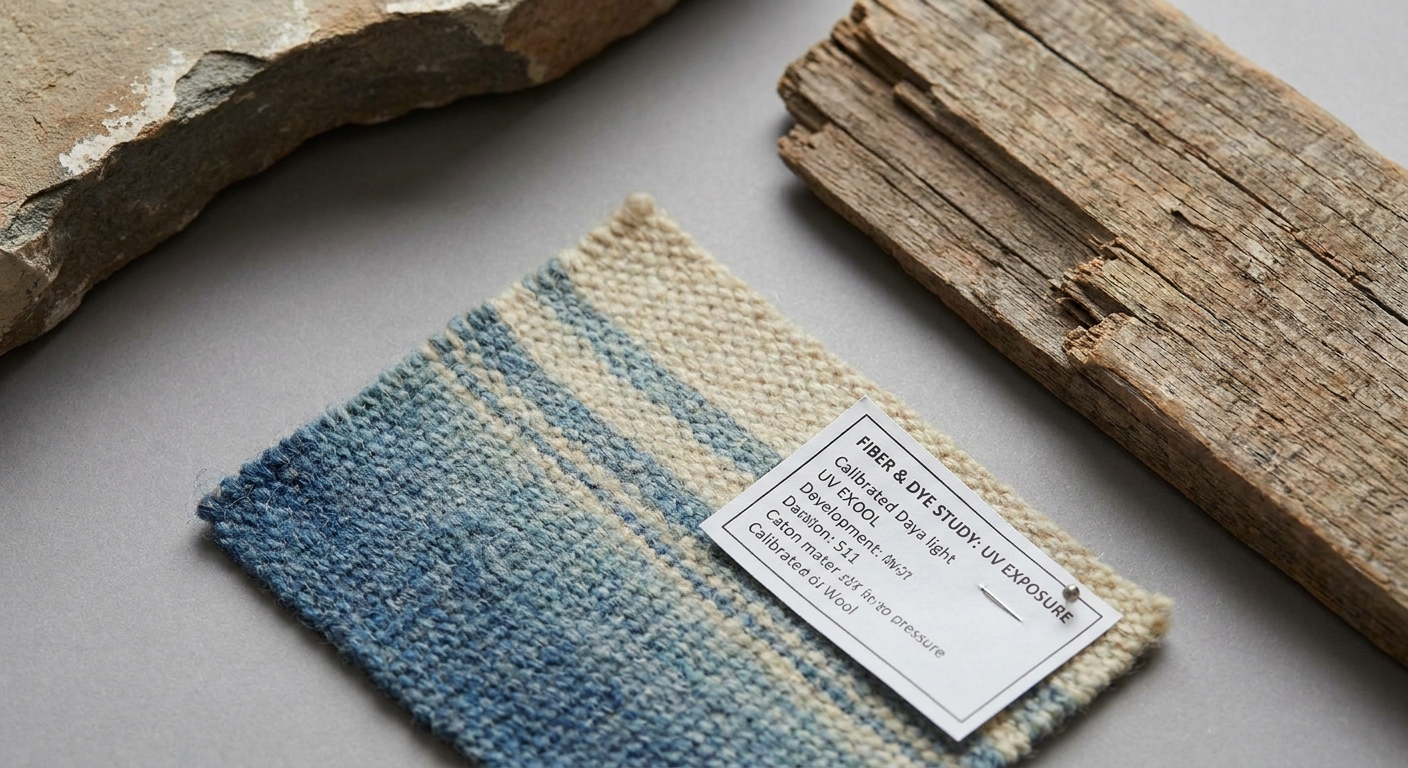
Why do historic interior design periods influence modern textile preservation?
Historic interior design periods establish baseline preservation standards because antique furniture pieces and vintage textiles require strict environmental controls, including ultraviolet light filtration and humidity management, to prevent irreversible dye fading and structural deterioration of delicate natural fibers under modern window exposure conditions.
Analyzing historical decorative arts helps fabric owners understand material vulnerabilities during interior restoration projects. The Victoria and Albert Museum describes Art Deco as an international style that spread during the 1920s and 1930s across architecture, interiors, furniture, and industrial design. Preserving textiles from the 1920s requires limiting direct sunlight exposure to less than 50 lux. Similarly, the Encyclopedia Britannica places Rococo decorative arts in eighteenth-century Europe and identifies asymmetry, curves, and shell-like ornament as recurring features. Eighteenth-century Europe textiles often feature fugitive dyes that fade rapidly without museum-grade window glazing.
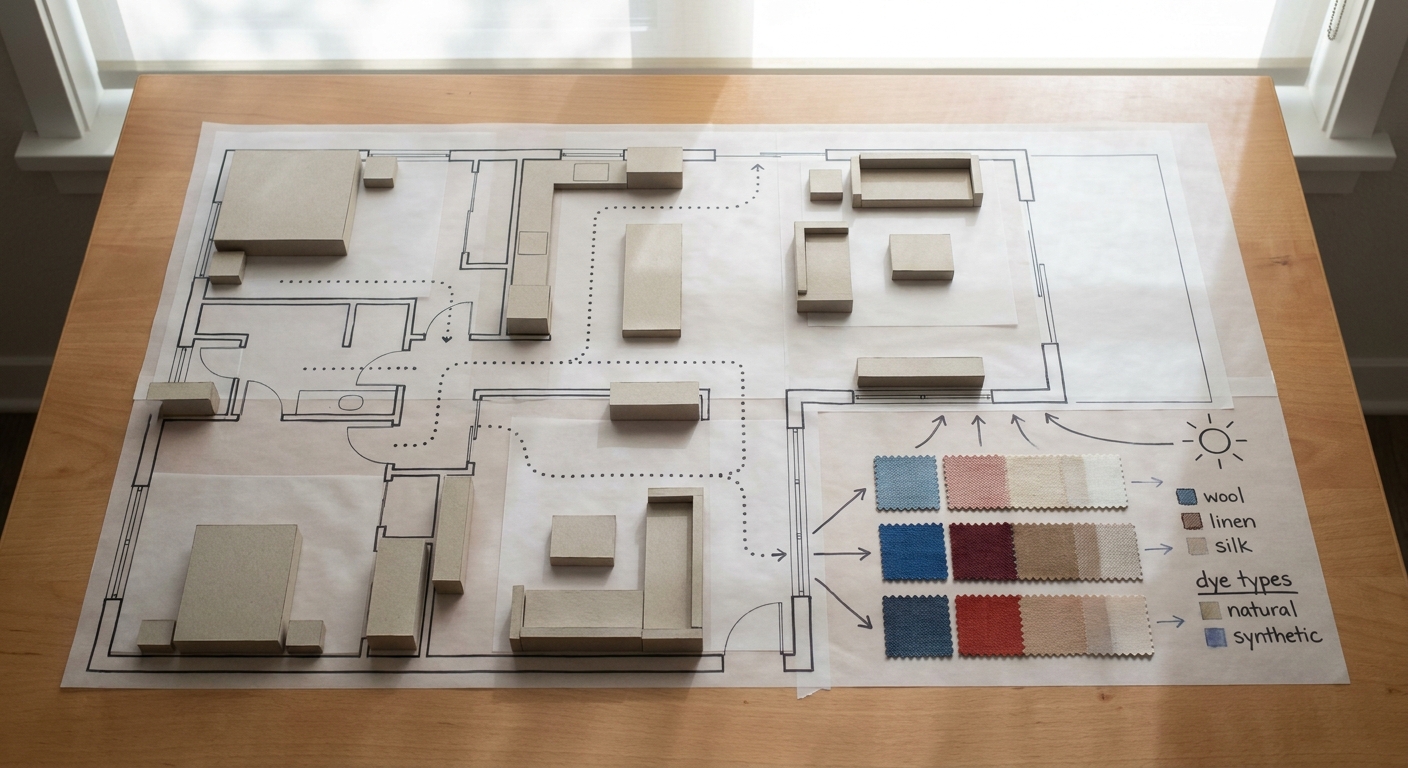
What measurements determine safe window exposure for furniture materials?
Safe window exposure for furniture materials depends on measuring ultraviolet light transmission percentages, visible light transmission rates, and solar heat gain coefficients through specific glass panes to calculate the exact degradation risk for dyed interior design textiles placed within 36 inches of exterior windows.
Standard clear double-pane glass blocks approximately 60% of ultraviolet radiation, leaving interior textiles vulnerable to the remaining 40% of damaging rays. Installing low-emissivity window coatings or specialized architectural films can increase ultraviolet blockage to 99%. The National Park Service preservation briefs provide source-backed guidance for historic wood, plaster, and paint conservation in buildings under documented preservation conditions. Applying National Park Service guidelines to residential interiors helps fabric owners establish measurable light exposure limits for sensitive dyed materials.
Material specifications and fading resistance criteria
Fabric owners should consult standardized testing metrics when selecting upholstery for sunlit rooms. Evaluating specific fiber types reveals significant differences in ultraviolet resistance under identical lighting conditions.
| Fiber Type | Dye Compatibility | Ultraviolet Resistance | Recommended Window Distance |
|---|---|---|---|
| Solution-dyed Acrylic | High | Excellent | 0 to 12 inches |
| Polyester | Moderate | Good | 24 to 36 inches |
| Cotton | Low | Poor | 48 to 60 inches |
| Silk | Very Low | Very Poor | 72 to 84 inches |
Related reading on this site
Readers comparing planning rules can also review Three Selections Of Roller Window Shades For Homeowners Looking For Decor for adjacent context on the same site.
Material and proportion decisions connect closely with Why You Might Need To Get A House Some Window Hardware, which gives readers another local reference point.
Project research can continue with Finding Custom Window Treatments To Fit Your Home when the next question concerns a neighboring design topic.